
What is a Duct Heater? What is it Used For?
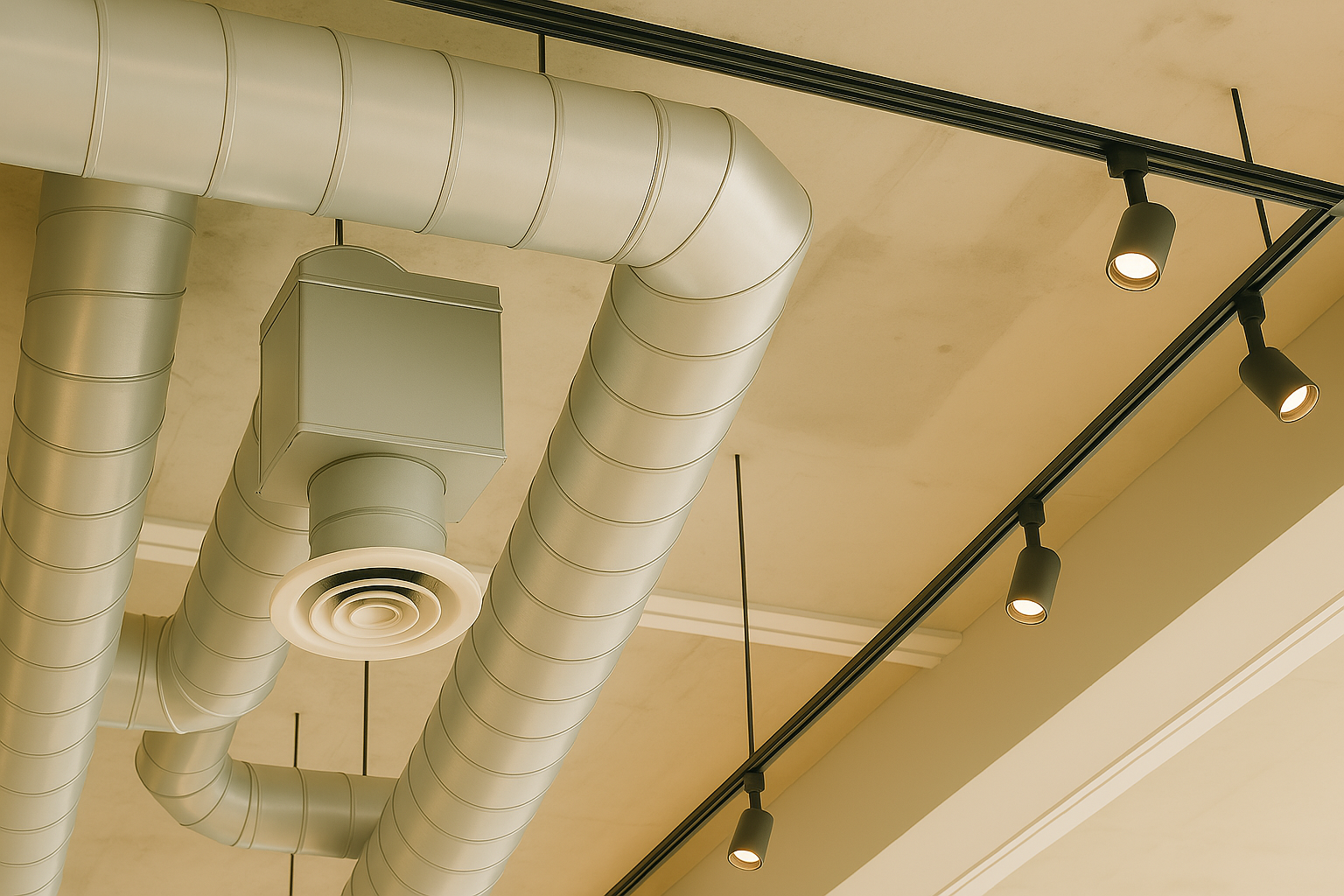
What is a Duct Heater, What is it Used For?
HVAC systems not only provide comfort in living spaces but also undertake critical tasks such as maintaining continuity in production processes, ensuring stability in environments requiring precise conditions, and optimizing energy efficiency. Among these systems, duct heaters are an important solution that allows for the controlled heating or maintenance of ambient air at a specific temperature.
These devices, typically used as part of central ventilation systems, are preferred not only in conventional office buildings but also in special application areas requiring constant temperature control, such as pharmaceutical factories, food processing plants, laboratories, and data centers. In these areas, even a few degrees of temperature deviation can affect production quality or system performance, making the stable and precise control offered by duct heaters extremely important.
These heaters, adaptable to different infrastructures with electric or hot water coil models, can also work integrated with cooling systems when needed. Especially in VAV (Variable Air Volume) systems, duct heaters used for reheat purposes allow for effective management of temperatures in both comfort zones and process environments.


What is a Duct Heater?
Duct heaters are HVAC components used in ventilation ducts, designed to bring the air passing through the duct to a specific temperature. They are typically integrated into central HVAC systems and efficiently distribute heated air to spaces as needed. They have a wide range of applications, from comfort-oriented uses to industrial areas requiring special process temperature control.
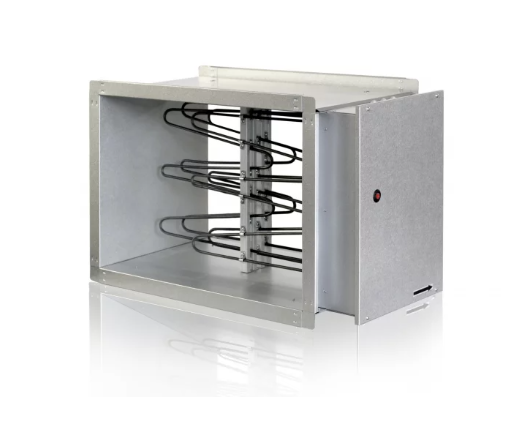
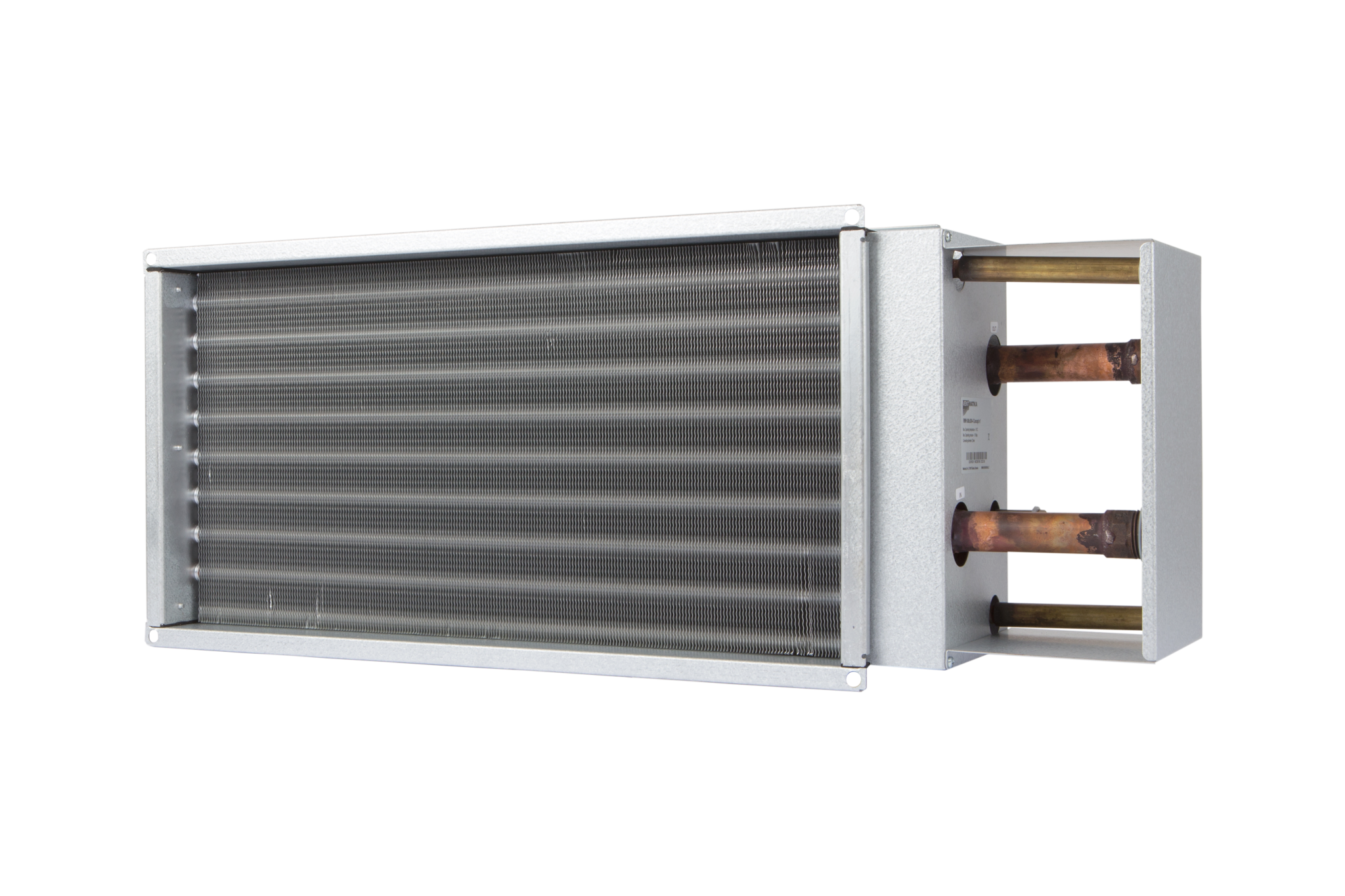
Duct heaters are divided into two main groups: electric duct heaters and hydronic duct heaters. In electric duct heaters, air passes over resistance elements, absorbing heat and reaching the target temperature. In hydronic duct heaters, heat transfer occurs as air passes over coils through which hot water circulates. The purpose of both methods is to raise the temperature of the passing air to the desired value and deliver this heated air to the required areas.
Duct heaters can be manufactured to suit different duct cross-sections (round or rectangular). They can be designed in various sizes and capacities according to air flow rate, temperature requirements, and system control infrastructure, and can be mounted vertically or horizontally.
They are also designed with various protective equipment for system safety. Many models include automatic temperature thermostats (limiters) that cut off the circuit when the air outlet temperature exceeds a certain value (e.g., 50 °C). In addition, a second layer of safety can be provided with manual reset safety thermostats (e.g., 100 °C) against higher temperatures. These systems help protect the device and installation from overheating damage and prevent potential fire risks. However, since these features can vary from device to device, it is important to carefully evaluate the technical specifications of the product to be used.
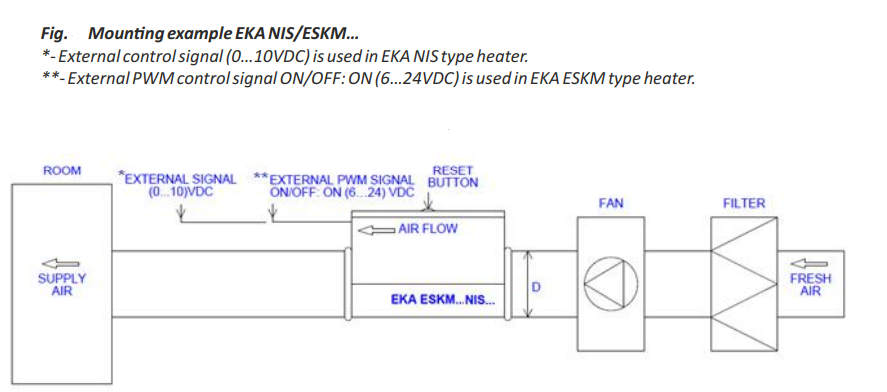
Duct heaters are designed to be compatible with different control systems. Although various control options are offered according to application needs, the most commonly preferred in practice are generally ON/OFF and 0–10 V proportional control methods.
In addition, various optional accessories can be used with duct heaters to improve system performance and ensure safety. These accessories include components such as air flow sensors, differential pressure switches, contactors, and alarm relays. These devices increase the operational safety of the unit and facilitate its integration into automation systems.
How Do Duct Heaters Work?
Duct heaters work to bring the airflow within the ventilation system to the target temperature. They are generally produced in two main types: electric or hydronic systems. These systems heat or, in some applications, cool the air passing through the duct, providing comfort conditions or process requirements according to the ambient temperature needs.
In electric duct heaters, clean air is heated directly by passing over resistance elements. These resistances can be made of high-temperature resistant materials such as stainless steel, depending on the application requirements. As clean air passes over these hot surfaces, it absorbs heat, reaches the target temperature, and is then delivered to the environment through distribution ducts.
In hydronic duct heaters, air is heated by passing over coils through which hot water circulates. These types of systems are usually connected to a central boiler system and are preferred especially in industrial or large-scale buildings. The same systems can also be integrated with chilled water coils for cooling purposes.
The operation process of duct heaters generally consists of the following steps:
- Airflow Initiated: With the operation of the ventilation system, air movement within the duct begins, and clean air is directed towards the heater or cooler.
- Heat Transfer Occurs: Clean air passes over resistance elements in electric models, or coils circulating hot or cold water in hydronic systems, where heat transfer takes place. This brings the air to the desired temperature level.
- Temperature Sensors Activate: Sensors in the system continuously monitor the air temperature. When the predetermined temperature value is reached, the system deactivates itself or adjusts the heating/cooling level.
- Protection Thermostats Activate: Safety thermostats, which activate in stages against overheating, such as at 50 °C and 100 °C, prevent damage to the device and the system.
- Conditioned Air is Distributed to the Environment: Heated or cooled air is delivered evenly and controllably to the desired areas through diffusers or grilles via the duct system.
Thanks to advanced control systems, the temperature level can be controlled remotely or integrated into an automation system for more precise management. This offers both energy savings and helps maintain desired comfort conditions sustainably.
Purpose and Operation of Duct Reheat Heaters
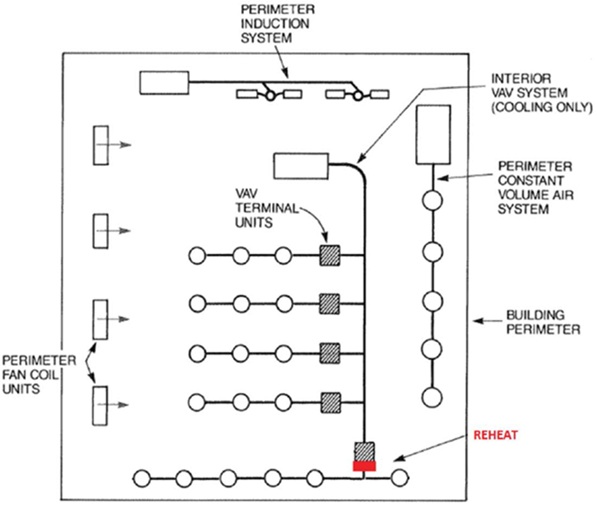
Duct reheat heaters are typically used downstream of terminal units in Variable Air Volume (VAV) systems that supply air at a constant (usually cooled) temperature. The aim of these systems is to determine a constant and low supply air temperature for the entire building while being able to meet the different heating/cooling needs of each zone.
Why is Reheat Necessary?
Some zones have greater heat loss/gain due to facade orientation, window areas, or internal loads. The constant temperature air coming from the central air handling unit may not meet the heating needs in some areas; if the full flow rate is opened, there may be excessive cooling. In such cases, if the zone temperature is low while the VAV box is operating at minimum flow, the reheat coil activates. This ensures both a constant and desired air temperature and flexible zone management.
Operating Principle
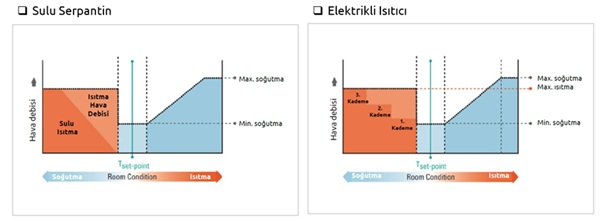
- Cooling mode: High flow rate, heating coil/resistor off.
- Dead-band: Minimum flow rate, coil/resistor off.
- Heating mode: Minimum flow rate, if temperature is insufficient, reheat coil activates; coil operates with hot water or electricity.
Our product page: https://www.stekonair.com/elektrikli-kanal-tipi-isiticilar/
For detailed information about duct heaters and customized solutions for your needs, please contact us.
+90 216 470 00 70