Acoustic Design and Noise Control in HVAC Systems

Acoustic Design and Noise Control in HVAC Systems
In modern buildings, the concept of comfort represents a holistic experience, extending far beyond thermal parameters such as temperature, humidity, and air velocity. The most critical, yet often least noticed, component of this experience is the acoustic character of the space. Acoustics, as one of the fundamental engineering criteria determining the quality of use of a space, is the “invisible” performance indicator of air conditioning systems.
Especially in offices where focus is essential, in conference rooms where information is shared, or in libraries where absolute silence should prevail, noise is not only a source of discomfort but also an obstacle that directly reduces productivity. Any hum, whistle, or vibration originating from HVAC systems and not controlled during the design phase overshadows the architectural success of the space, creating psychological fatigue for the user.
The primary goal of acoustic design is to keep air conditioning noise at levels that do not interfere with the intended use of the space and to optimize sound quality in accordance with standards. Therefore, the correct air conditioning strategy is not just to condition the air, but to deliver it to the space at a flow rate appropriate to acoustic criteria.
The Foundation of Acoustic Comfort: NC and RC Criteria
Acoustic design is based on internationally accepted curves determined by the function of the space. The most commonly used are NC (Noise Criteria) and RC (Room Criteria) curves:
- Libraries and Concert Halls (NC 20 – 25): This level, where the human ear perceives near-absolute silence, is a necessity for high-sensitivity areas. In libraries, where even the slightest mechanical click can be distracting, the aim is to maintain deep focus. In concert halls, to ensure the finest nuances of music are heard, the air conditioning system is designed to remain below these limits, making its presence completely unnoticeable.
- Offices and Meeting Rooms (NC 30 – 35): In the business world, productivity is directly related to the capacity for focus and speech privacy. Background noise exceeding NC 35 reduces speech intelligibility (STI), causing employees to raise their voices to understand each other and leading to significant mental fatigue by the end of the day. In an ideal design, this balanced range is preferred, where the ventilation system creates a slight “masking” to block whispers from the next desk but does not disrupt main communication.
- Social Areas and Lobbies (NC 40 – 45): In areas with high human circulation, the goal is not absolute silence but rather to provide “acoustic privacy.” A very quiet lobby or restaurant environment would cause every private conversation to be heard throughout the space; therefore, controlled background noise in the NC 40-45 range acts as an “acoustic shield” that softens conversations and protects privacy.
These criteria control not only the intensity of sound but also its quality. For example, a low-frequency rumble or a high-frequency hiss from the system can cause significant discomfort to the user, even if the total decibel level is low.
Sound Transmission Paths in Air Conditioning Systems
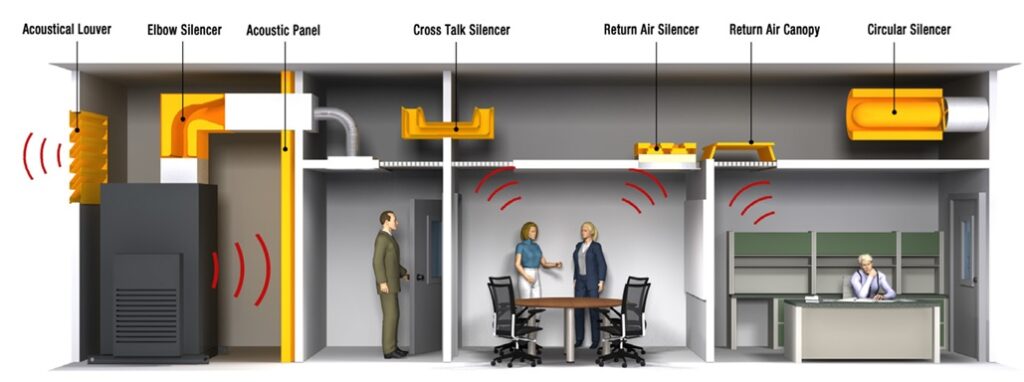
Noise in HVAC systems spreads through complex and multifaceted transmission paths from the source to the space. Each transmission mechanism in this process requires a unique engineering approach and control strategy. The most fundamental components of these paths, evaluated as a system whole, are:
- Via Air Ducts (Airborne): This is when fan noise follows the airflow within the duct and reaches the space directly through the diffusers. This transmission path is the main sound source of the system and is directly affected by the choices made at the diffuser throats.
- Duct Breakout: This is when noise leaks out through the duct walls into the suspended ceiling void and from there into the room. This is more common in rectangular and flexible ducts, becoming a more critical problem as the duct surface area increases.
- Cross-talk: This is the transmission of sound from one room to another via the duct system. The use of “cross-talk silencers” is essential at this point, especially as it leads to privacy issues between adjacent meeting rooms or executive offices.
Aerodynamic Noise and Turbulence Effect
Noise generated by airflow itself typically results from physical limitations and design flaws in the system:
- Air Velocity and Duct Sizing: Air velocity is logarithmically related to noise level; doubling the velocity causes an approximate 18-decibel increase in sound level. Keeping duct dimensions wide is the most fundamental way to minimize noise by reducing turbulence.
- Dampers and Elbows: Dampers used to balance airflow, especially when approaching a fully closed position, narrow the airflow, producing high-frequency turbulence noise (hiss). Similarly, sharp turns and elbows within the duct disrupt the laminar flow of air, leading to the formation of “regenerated noise.”
Solution Strategies and the Importance of Early Design
Noise control is a technical and economic necessity that must be addressed in the earliest stages of a project.
- Velocity Management and Cross-Section Optimization: Sizing ducts and air distribution elements within velocity limits appropriate to the space's target NC curves prevents noise at its source. Keeping air velocity within design limits reduces turbulence, preventing the logarithmic increase in noise.
- Acoustic Insulation and Material Selection: Lining ducts with sound-absorbing materials prevents sound waves from being transmitted through reflections. Additionally, flexible connectors and anti-vibration devices should be used to stop the transmission of structural noise and vibrations.
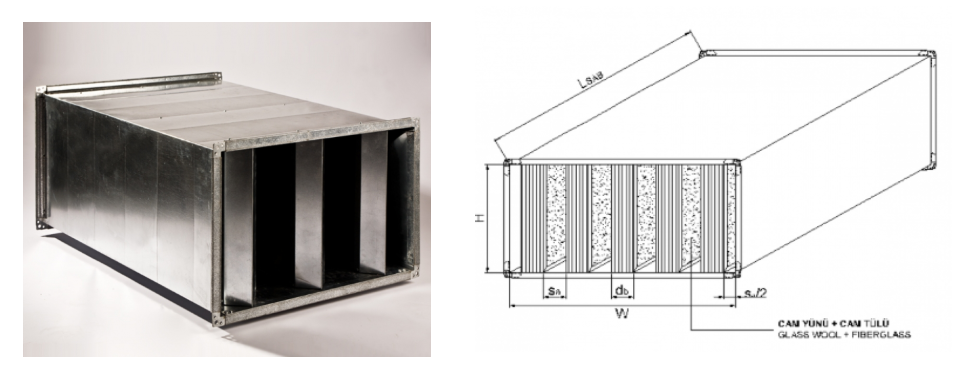
- Silencer Optimization and Life Cycle Cost: Properly sized and positioned silencers enable the achievement of target NC values without reducing energy efficiency. Poorly designed or retrofitted silencers create additional pressure losses in the system, causing fans to consume more energy and increasing the total operating cost (LCC) of the building.
Acoustic performance in air conditioning systems is an inseparable whole with thermal comfort, aesthetics, and energy efficiency. The fundamental engineering goal in a space is not just to reduce noise, but to ensure sound quality and level appropriate to the function of that space. A design strategy based on internationally accepted NC and RC standards, with proper management of air transmission paths and flow velocities, prevents noise problems at their source before they arise.
This approach maximizes user productivity and comfort in the space, while preventing acoustic problems and additional costs that may be encountered throughout the system's operating life. Prioritizing acoustics when designing the air conditioning infrastructure of buildings is the key to creating not only silent but also peaceful and high-quality living spaces.