Using High Induction Diffusers to Improve Air Quality
USING HIGH INDUCTION DIFFUSERS TO IMPROVE AIR QUALITY
In ceiling-type air distribution systems operating in heating mode, it is often difficult to improve ventilation performance. The main reason for this is that warm supply air struggles to spread downwards due to positive buoyancy. Furthermore, heating in mixed air distribution systems is typically designed to operate with lower airflows and supply air temperatures approximately 10°C higher than the ambient temperature, compared to cooling. This situation leads to problems such as undesirable thermal stratification and inadequate air distribution, especially during winter months.
According to ASHRAE Standard 62.1, the efficiency of a ventilation system is measured by how effectively clean air can be delivered to the occupied zone. From this perspective, systems with low air distribution effectiveness both reduce comfort and lead to energy inefficiency.
While many solutions exist for these problems, the use of high induction swirl diffusers stands out due to their easy integration with existing systems and cost-effectiveness.
High induction diffusers introduce air into the environment with a ceiling-parallel swirling motion. Thanks to this circulation, the throw distance is shorter than traditional diffusers, while more room air is induced in the region near the ceiling. This results in more homogeneous air mixing in the living space, reduced thermal stratification, and increased air distribution effectiveness.
The field performance of these diffusers was tested in a new elementary school project built in Quebec by the Predict engineering team of Price Industries, whom we represent. The team conducted a detailed computational fluid dynamics (CFD) analysis for a typical 567 square meter classroom in the school to evaluate the performance of the air distribution system in heating mode.
In the initial design (Figure 1), in addition to low-induction slot diffusers placed in front of the windows, two swirl diffusers were positioned in the center of the classroom. This arrangement aimed to achieve a more homogeneous temperature distribution indoors and more effective fresh air delivery to the occupied zone.
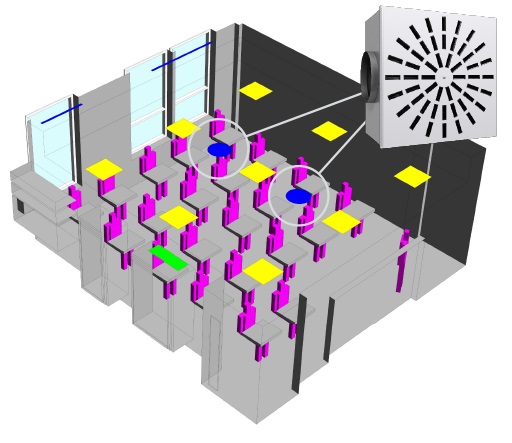
Figure 1. CFD classroom model of the initial design
CFD results for the initial design showed high thermal stratification in the room (as shown in Figure 2) and low air distribution effectiveness in the occupied (breathing) zone.
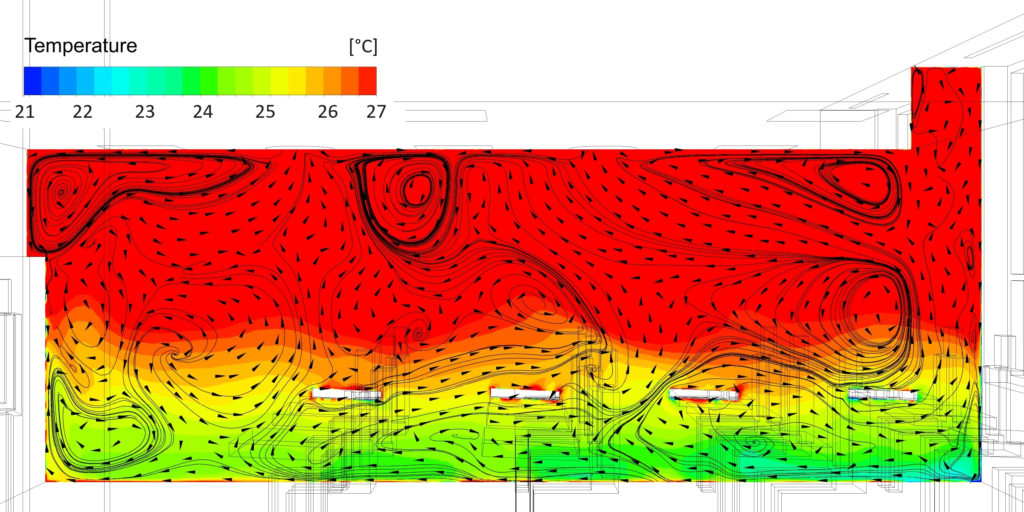
Figure 2. Temperature profile of the initial design with superimposed velocity vectors
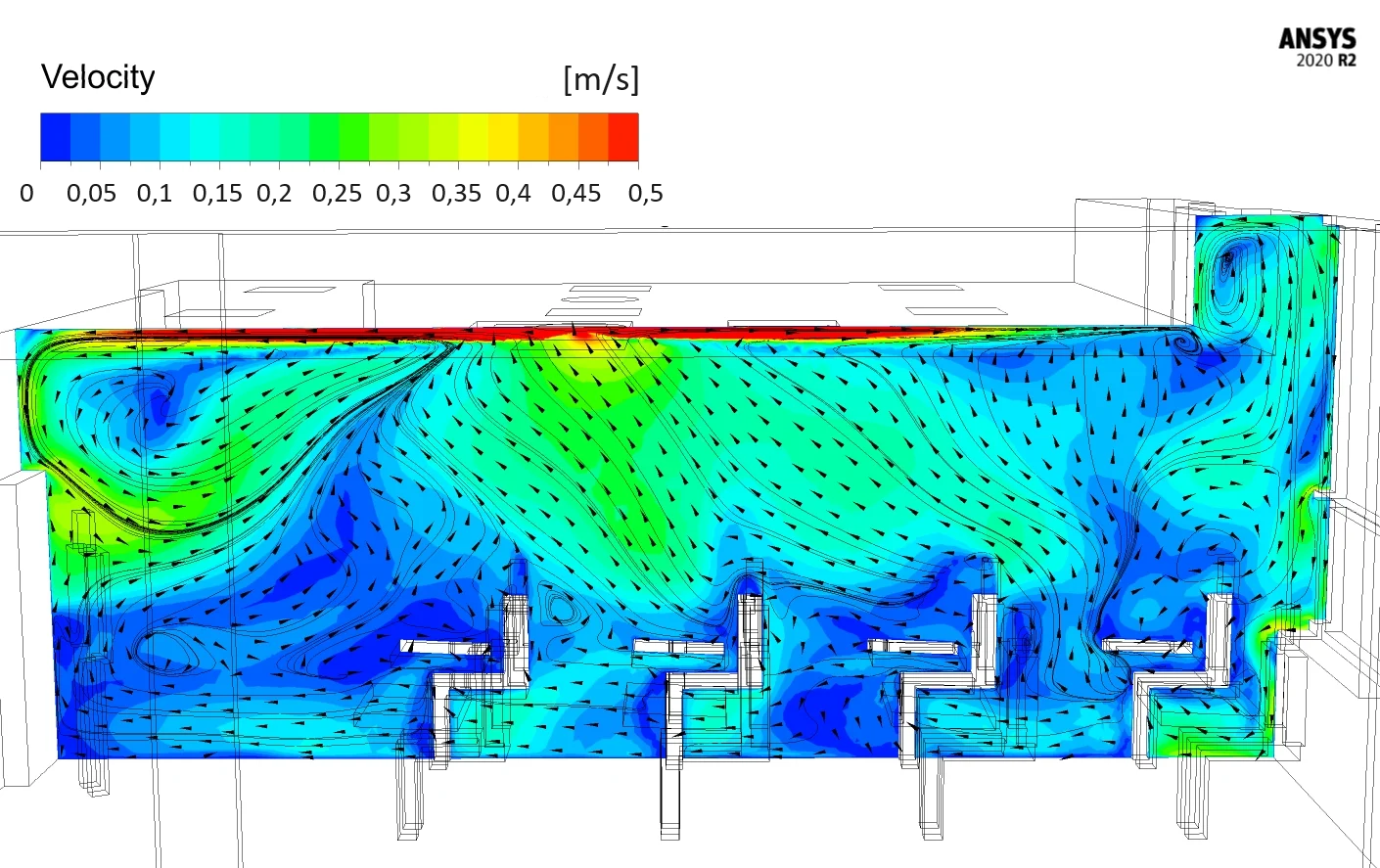
Looking at the air patterns in Figure 3, we can see that although the system created air movement towards the occupied zone, it was not sufficient to adequately mix the warm supply air into the occupied zone.
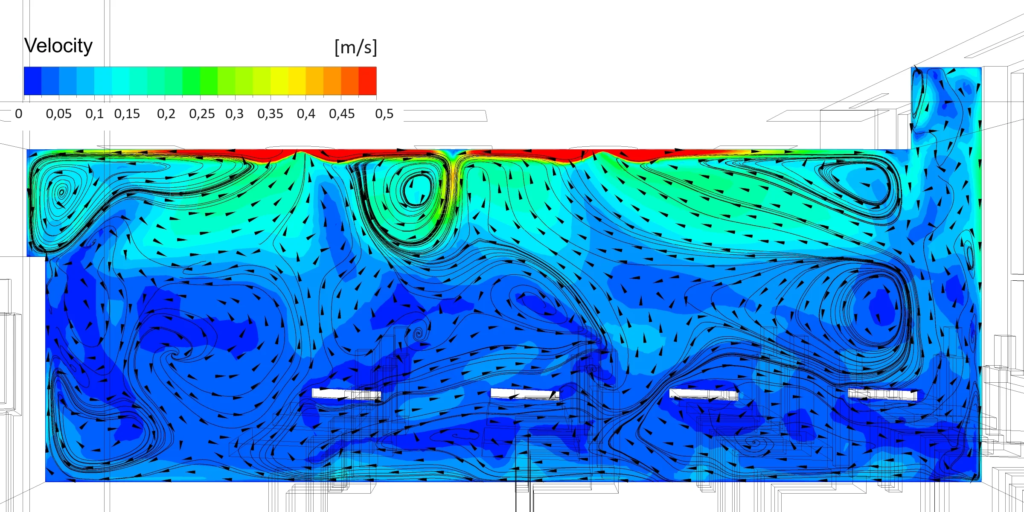
Figure 3. Velocity profile of the initial design with superimposed velocity vectors
In the team's final design, the slot diffusers were removed from the system, and the entire airflow was distributed into the environment through repositioned swirl diffusers to optimize air mixing.
This optimized arrangement resulted in a more homogeneous temperature distribution within the classroom (Figure 4), significantly reduced thermal stratification, and a meaningfully increased regional air distribution effectiveness. This also provided a noticeable improvement in user comfort.
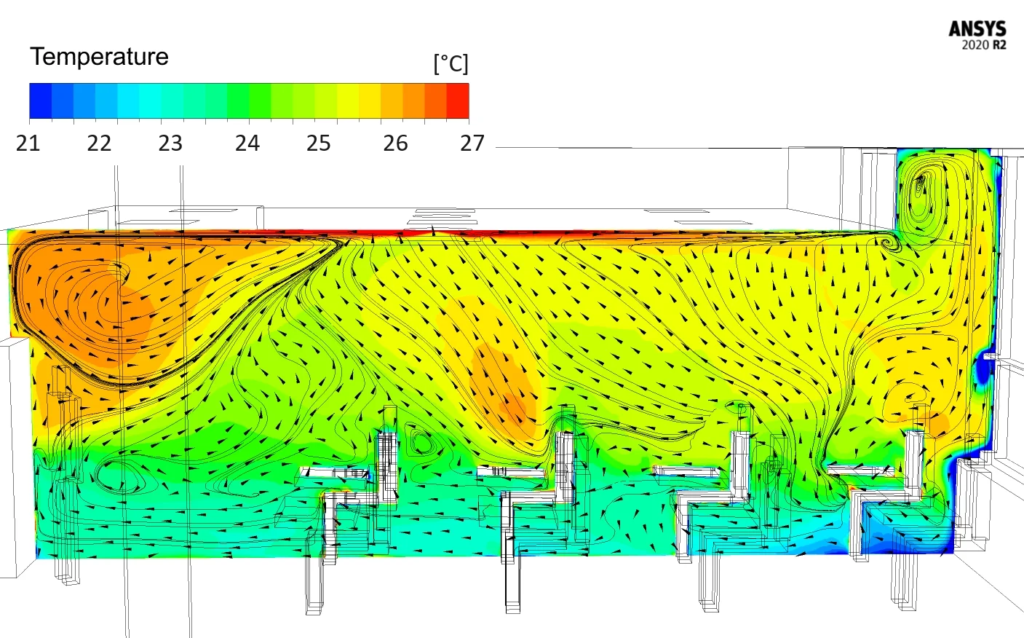
Figure 4. Temperature profile of the optimized design with superimposed velocity vectors
If we compare Figure 5 with Figure 3, we can understand why this is the case. In the optimized design, the placement of diffusers with extra airflow creates more air movement and allows the supply air to penetrate even deeper into the occupied zone.
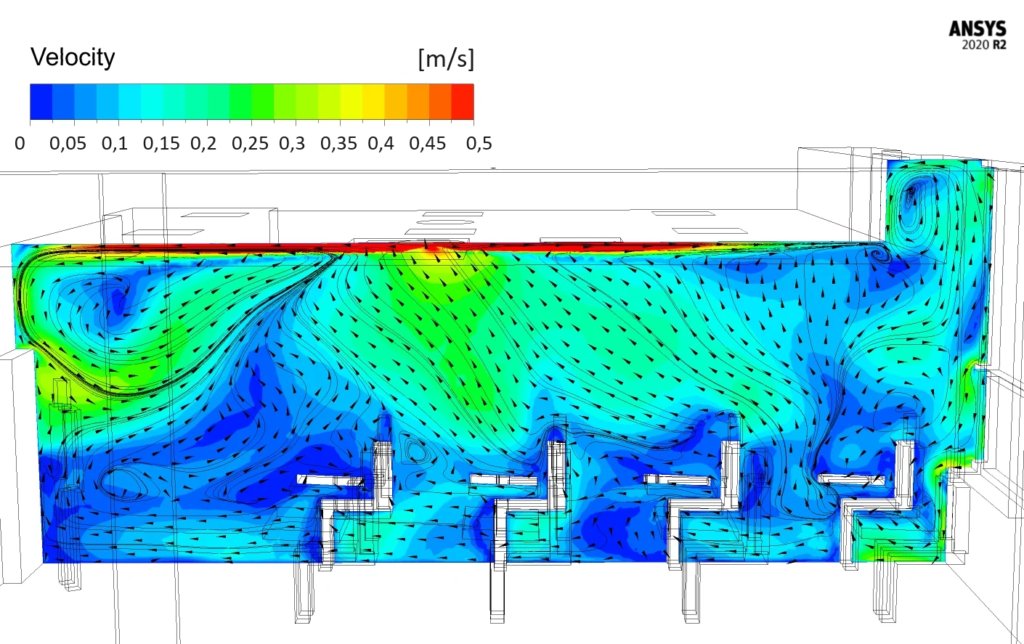
Figure 5. Velocity profile of the optimized design with superimposed velocity vectors
This study demonstrates not only the effectiveness of swirl diffusers in heating regimes, but also:
- The positive/negative effects of designing diffusers within the correct flow ranges on air distribution,
- The advantages of using high induction equipment, whether slot diffusers or any other type of diffuser,
- How beneficial CFD analyses are in fully simulating different designed systems and helping select the healthiest air distribution system.
As STEKON, we determine the most suitable among hundreds of different diffuser systems we supply and produce for air distribution solutions according to your scenario and price them appropriately.
Source: Price Industries