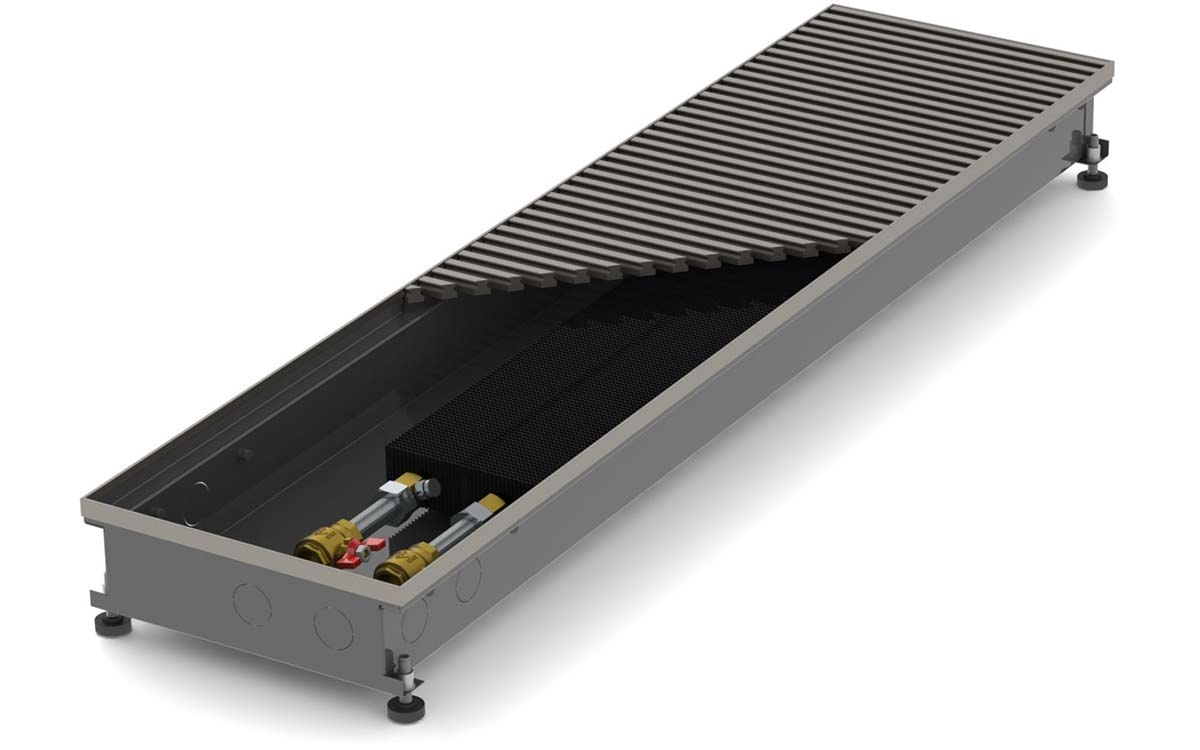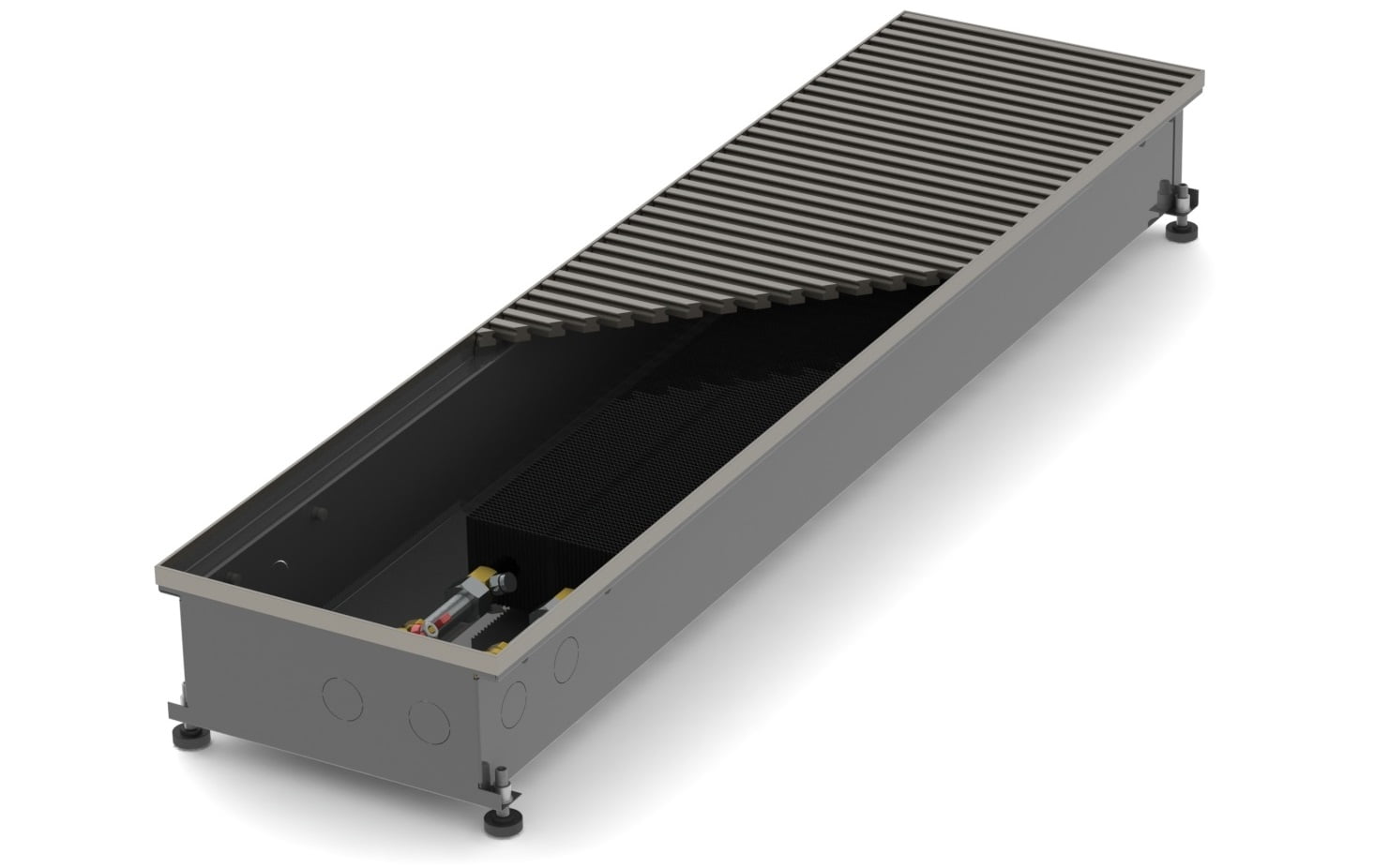
Trench Heater
Stekon Trench Heater
Stekon Trench Heater
Trench heaters are suitable for use with or without fans. In environments with large glass surfaces, they create a thermal curtain, providing thermal comfort. They also prevent fogging that may occur on the glass surface due to temperature differences/changes. Trench heaters thus prevent both fogging and heat transfer.
Trench heaters are generally used in areas such as residences, offices, hotels, and factories.
Don't forget to read our blog post that might interest you: http://stekonair.com/neden-yer-konvektoru-daha-avantajli/
For operating principle and installation video: https://www.youtube.com/watch?v=zYDjKNzuehg
STEKON trench type convectors are designed to provide high thermal comfort conditions in environments with large external glass surfaces. This comfort is achieved by a thermal curtain created in front of cold glass surfaces. It also prevents a possible condensation problem on the glass surface. Convectors provide hot air circulation through hot water-sourced heat exchange, either fan-assisted or by natural convection.
LC series fan convectors operate with 24V DC safe voltage. Integrated EC fans have very low energy consumption and adjust their speed based on information received from the thermostat or building automation system according to the ambient temperature. They are suitable for 0-10V input signals.
Advantages of Stekon Trench Heater
• Fan or fanless convector options
• Economical and safe operation with 24 V DC supply voltage
• Single-piece convector lengths from 1000 mm to 3000 mm
• 65 – 80 or 110 mm convector height options
• Various grille and frame options
• Special coating options
• Ultra-quiet cross-flow fans
• Comfortable and continuous 0-10 V speed control voltage
• Easy installation thanks to Plug-and-Play box
• Convector coils tested according to EN 442-2
Trench type convector selection recommendations
• It should be decided whether the convector will be the main or auxiliary heat source for the room, or if it will be used as a heat curtain.
• The total heat loss in the room and how much of it will be provided by the convector should be determined.
• It should be determined whether the fanless convector can provide the required heating capacity and if fan assistance is needed accordingly.
• The available length and cross-sectional area should be considered for sizing the convector.
• A suitable location should be determined for the transformers (with 24 V DC output) required for the fan convector to operate.
• A suitable location should be determined for the thermostat to be used in the room.
• Arrangements should be made in the installation considering water connection and wiring requirements for the convector.
Construction, Materials
• Painted galvanized steel casing
• Aluminum grilles and frames
• Aluminum fin-copper tube coil
• Black painted galvanized steel fans
Accessories, Special variations
• 0-10 V or on/off control options
• Grille options parallel to the long side or short side
• Anodized or RAL painted grilles
• Angled corner connection pieces
• Water connection from the short or long side